

Discover how AI recruitment tools, talent management AI, and HR automation are reshaping the way organizations hire, engage, and plan for the future. Learn how AI can streamline processes, boost employee satisfaction, and predict workforce trends—unlocking the full potential of your HR strategy!
Introduction: Why AI is Revolutionizing Human Resources
The role of Human Resources (HR) has evolved significantly in the digital age. As businesses strive to build productive, engaged, and future-ready workforces, Artificial Intelligence (AI) has emerged as a transformative force in HR. From optimizing recruitment strategies to enhancing talent management, AI is revolutionizing how organizations attract, retain, and nurture talent.
For HR professionals, the adoption of AI in recruitment and workforce planning offers solutions to long-standing challenges. AI tools help streamline hiring processes, identify the best candidates faster, and enhance employee engagement through data-driven insights. These technologies not only save time but also improve decision-making, ensuring companies build teams that align with their values and goals.
In this article, we’ll explore how AI recruitment tools are transforming hiring, the role of talent management AI in employee retention, and how HR automation enables organizations to predict workforce trends and plan for the future.
1. AI in Recruitment: Hiring Smarter and Faster
Recruitment has traditionally been a time-consuming and resource-intensive process. Sorting through resumes, scheduling interviews, and assessing candidates require significant effort. AI recruitment tools are changing the game by automating repetitive tasks and providing deeper insights into candidates’ skills and potential.
How AI Recruitment Works
- Resume Screening: AI tools analyze resumes to identify candidates who match job descriptions, saving HR teams hours of manual effort.
- Candidate Ranking: AI algorithms rank applicants based on skills, experience, and compatibility with company culture.
- Interview Scheduling: HR automation tools manage interview schedules, reducing back-and-forth communication.
- Conversational AI: Chatbots interact with applicants, answering questions and conducting initial screenings.
Key Benefits of AI Recruitment
- Faster Hiring: Automated processes reduce the time-to-hire, allowing companies to secure top talent quickly.
- Reduced Bias: AI evaluates candidates based on data, minimizing unconscious bias in hiring decisions.
- Improved Candidate Experience: AI-powered chatbots keep candidates informed and engaged throughout the hiring process.
Example Tools:
- HireVue: Uses AI in recruitment to assess video interviews and predict candidate success.
- Pymetrics: Combines AI and neuroscience to match candidates with roles based on cognitive and emotional traits.
With AI recruitment, HR teams can focus on strategic tasks while letting technology handle the tedious work.
2. Talent Management AI: Nurturing and Retaining Employees
Once candidates are hired, retaining them and helping them grow becomes the next priority. Talent management AI solutions enable HR professionals to analyze employee performance, identify skill gaps, and create personalized development plans.
How AI Enhances Talent Management
- Employee Analytics: AI tools track key performance indicators (KPIs) and engagement levels, offering actionable insights to managers.
- Learning Recommendations: AI-powered platforms suggest training courses or resources tailored to employees’ goals.
- Succession Planning: AI predicts which employees are ready for leadership roles and identifies potential successors.
Key Benefits of Talent Management AI
- Personalized Development: Employees receive customized growth opportunities, increasing job satisfaction and retention.
- Data-Driven Decisions: HR teams can use AI insights to make informed decisions about promotions, raises, and workforce planning.
- Engagement Tracking: AI monitors employee feedback and engagement, helping organizations address concerns proactively.
Example Tools:
- Workday: Uses talent management AI to analyze employee performance and recommend development opportunities.
- Cornerstone OnDemand: Leverages AI to align employee goals with organizational needs.
By integrating AI in HR, companies can create a more supportive and engaging environment for their workforce.
3. HR Automation: Streamlining Administrative Tasks
One of the most significant impacts of AI in HR is the automation of repetitive tasks. From payroll processing to onboarding, HR automation tools handle administrative work efficiently, freeing up HR professionals to focus on strategic initiatives.
Examples of HR Automation
- Onboarding: AI streamlines the onboarding process by automating document submission, training assignments, and introductions to team members.
- Payroll Management: AI ensures accurate payroll calculations, compliance with tax laws, and timely salary disbursements.
- Employee Queries: AI chatbots answer common HR-related questions, such as leave policies or benefits information.
Key Benefits of HR Automation
- Time Savings: Automated processes reduce the administrative burden on HR teams.
- Consistency: AI ensures uniform application of HR policies and procedures.
- Cost Efficiency: By automating routine tasks, organizations can allocate resources to high-value activities.
Example Tools:
- ADP Workforce Now: Automates payroll, benefits, and compliance.
- BambooHR: Simplifies onboarding and employee data management with AI capabilities.
With HR automation, businesses can ensure smoother operations and a more seamless experience for both employees and HR teams.
4. Predicting Workforce Trends
with AI

Beyond managing current employees, AI in HR enables organizations to anticipate future needs and trends. Predictive analytics powered by AI and machine learning provide HR teams with insights into workforce dynamics, helping them plan for growth and change.
How AI Predicts Workforce Trends
- Turnover Predictions: AI identifies employees at risk of leaving based on engagement scores and historical data.
- Demand Forecasting: AI tools analyze industry trends to predict the skills and roles companies will need in the future.
- Diversity Analytics: AI tracks diversity metrics and suggests strategies to build more inclusive teams.
Key Benefits
- Proactive Planning: HR teams can address potential challenges before they arise.
- Future-Proofing: Organizations can prepare for changes in the market or workforce demographics.
- Better Resource Allocation: Predictive insights help allocate training budgets and recruitment efforts effectively.
Example Tools:
- Visier: Analyzes workforce data to identify trends and guide HR strategies.
- Eightfold AI: Uses predictive analytics to align workforce planning with company goals.
With predictive AI capabilities, businesses can stay agile and ahead of workforce challenges.
5. Challenges of AI in HR
While AI in HR offers many benefits, its adoption comes with challenges. Understanding these obstacles can help organizations navigate them effectively.
Key Challenges
- Data Privacy: Managing sensitive employee data with AI requires robust security measures to ensure compliance with regulations.
- Implementation Costs: Initial investments in AI-powered tools can be high, particularly for smaller companies.
- Bias in AI Algorithms: If not designed carefully, AI systems can perpetuate biases present in historical data.
How to Overcome Challenges
- Invest in Security: Use AI tools with strong encryption and compliance certifications to protect sensitive employee information.
- Start Small: Implement AI gradually, focusing on one or two areas before scaling up.
- Monitor Algorithms: Regularly audit AI systems to identify and address potential biases.
By addressing these challenges, organizations can maximize the benefits of AI in HR while minimizing risks.
Conclusion: The Future of
HR with AI
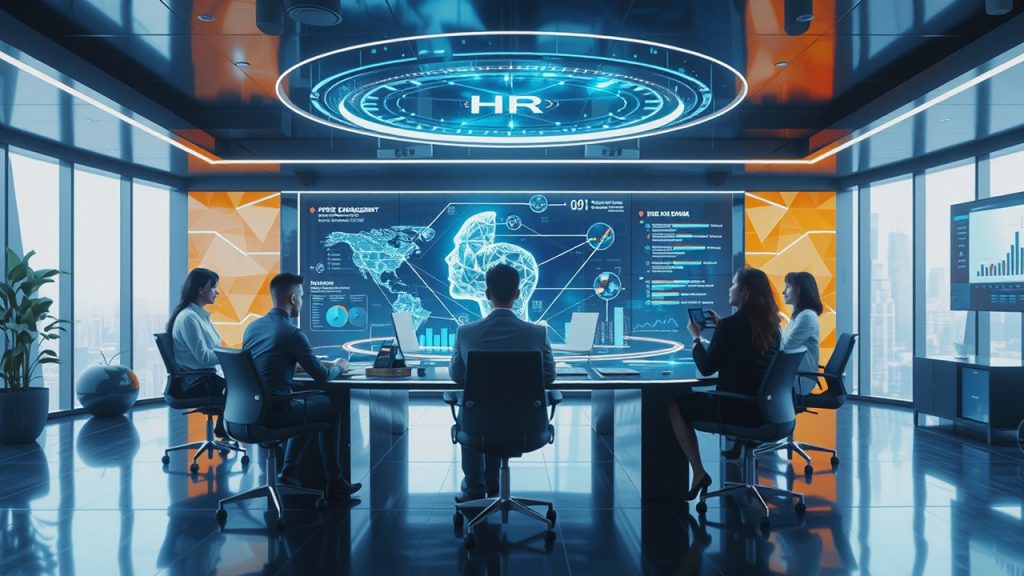
The integration of AI in HR is not just a trend—it’s a necessity for organizations that want to thrive in today’s fast-paced world. From AI recruitment tools that streamline hiring processes to talent management AI solutions that enhance employee development, AI-powered tools are reshaping how HR teams operate. By automating repetitive tasks, providing actionable insights, and predicting future workforce trends, AI in HR empowers businesses to make smarter, faster, and more impactful decisions.
As businesses adopt HR automation and predictive analytics, they unlock the potential to build stronger, more engaged teams while staying ahead of industry challenges. Tools like HireVue, Workday, and Visier highlight the immense possibilities of using AI to optimize recruitment, retention, and workforce planning.
However, as with any technology, successful adoption requires careful planning. Organizations must prioritize data privacy, address implementation challenges, and ensure that AI algorithms are free from bias. By taking these steps, companies can overcome obstacles and fully harness the power of AI for HR transformation.
The future of HR lies in AI-powered solutions that balance technology with human expertise. Whether you’re aiming to improve hiring efficiency, boost employee engagement, or plan for long-term workforce needs, AI in HR can be a game-changer. Don’t wait to embrace the opportunities that AI recruitment and talent management AI bring—start investing in these tools today to future-proof your organization and build a thriving, resilient workforce.
Ready to revolutionize your HR practices? Take the next step by exploring how AI can transform your organization. Start by taking the AI Assessment at assessment.com to discover the best tools and strategies tailored to your HR needs. The future of HR starts now—let AI guide the way!